Begin with the recipient's life
A meaningful gift starts with the person who will receive it, not with the longest product description. Ask how the object might fit into their home, practice, collection, or interests. Someone may value an item for regular use, another for its craftsmanship, and another for a connection with family history. Those purposes can lead to different choices even when the objects share the same name.
If the gift relates to religious practice, ask what the recipient prefers rather than assuming that every household uses the same objects in the same way. A discreet question can prevent an expensive mismatch. When a particular religious requirement matters, let the recipient or an appropriate trusted adviser explain it. A shopping comparison should not invent an answer from the appearance of a photograph or a broad category label.
Read an object record for more than its title
Museum records offer a useful example of how to describe an object precisely. The Metropolitan Museum of Art's record for a Hamburg Hanukkah lamp identifies its period, material, techniques, dimensions, and object number alongside the title. [1] Those fields help distinguish a particular object from the many things that might appear under the same search term.
Apply that habit to a purchase inquiry without treating a retail listing as a museum catalogue. Ask what the object is made from, how large it is, and which details the seller can confirm. Keep a stated fact separate from a descriptive phrase such as traditional style. If a claim about age, maker, or origin is central to the decision, ask what documentation supports it before allowing the story to outweigh the evidence.
Compare the intended use with the physical details
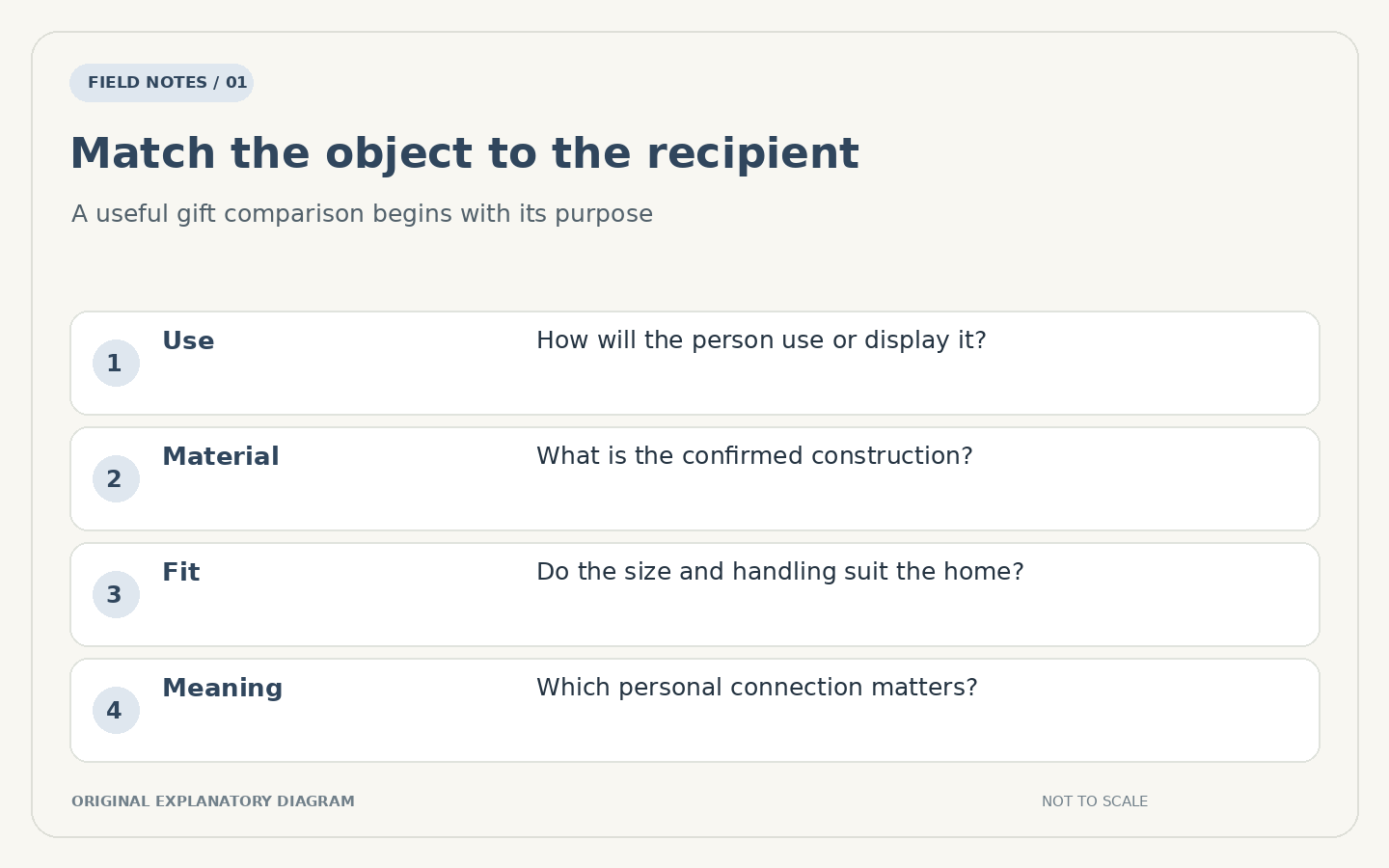
Think through the ordinary actions involved in using or displaying the object. Where will it stand? How will it be lifted, stored, or cleaned? Does it have detachable pieces, a fragile handle, or a surface that needs particular care? A photograph can make an item look substantial while giving little sense of its scale or how it fits into a real cupboard or shelf.
Make a simple space sketch with approximate dimensions and compare it with the listing. If the item is intended for food, drink, candles, or another practical use, confirm that intended use and the relevant instructions with the maker or seller. Decorative appearance alone should not be treated as proof of suitability. A careful question before purchase is easier than discovering an important limitation after the gift has been unwrapped.
Ask what the material description actually means
Material words deserve the same attention as the object name. Keep distinctions such as a solid material, a plated surface, a coating, and a mixed construction visible in your notes. If the description is unclear, ask the seller to explain the actual construction rather than accepting a more elaborate adjective. The answer affects expectations about appearance, handling, maintenance, and sometimes whether the item suits the recipient's intended use.
Avoid turning a hallmark or small inscription into an unsupported conclusion. Record it accurately and seek appropriate expertise when identification matters. A close-up photograph can help a qualified person assess the question, but it does not make an unfamiliar mark self-explanatory. When information remains uncertain, preserve that uncertainty in the gift record instead of replacing it with a confident origin story.
Keep the story and the documentation together
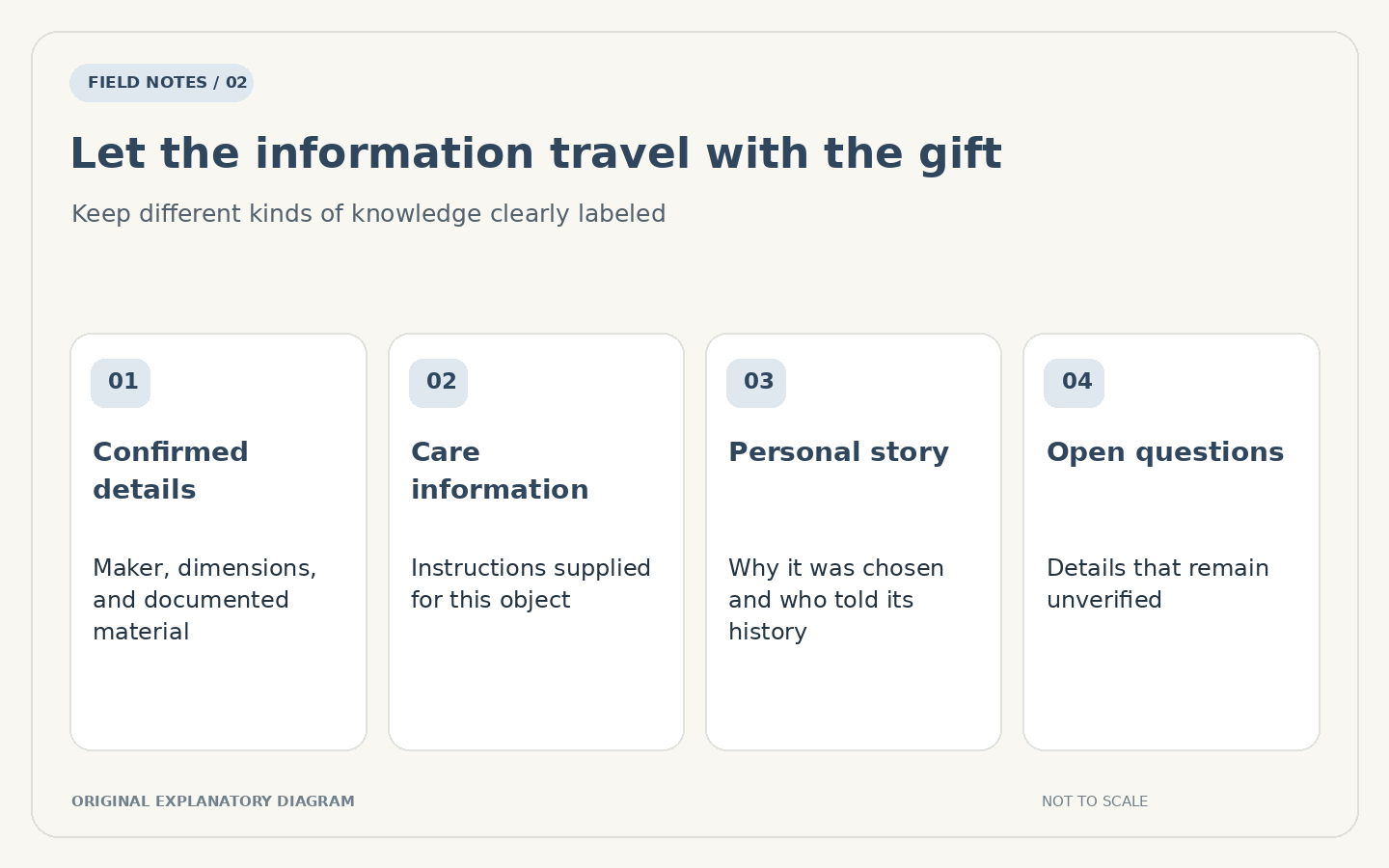
The Object ID approach promoted by museum organizations uses photographs and identifying details such as materials, measurements, inscriptions, and distinguishing features to describe cultural objects. [2] A modest home record can borrow that organizational idea. It does not need to become a formal appraisal to be useful to the recipient or to someone helping care for the object later.
Save the receipt, maker's information, care instructions, and a short account of why the gift was chosen. If a family story accompanies it, identify who supplied the story and which parts are remembered rather than documented. A personal association can be meaningful without being presented as a verified historical fact. Keeping the two kinds of information visible protects both the story and the credibility of the record.
Make personalization a reviewable decision
An inscription can turn a suitable object into a particularly personal gift, but it also creates a decision that may be difficult to reverse. Confirm the exact wording, spelling, script, date format, and placement before authorizing the work. Ask for a clear proof that shows how the text will fit. Do not rely on a rushed verbal description when the final result will remain on the object.
If the text uses a language or religious wording you do not confidently understand, have it checked by someone qualified and acceptable to the recipient. Consider whether personalization belongs on the object itself, a separate card, or another removable element. The right choice depends on the intended use and the recipient's preferences. A thoughtful gift does not require permanent engraving merely because the seller offers it.
Work through a hypothetical comparison
Imagine choosing between a contemporary serving object with clear use instructions and an older decorative piece with an appealing but uncertain history. The first may suit someone who wants an item for regular hosting. The second may interest a collector who is comfortable investigating its provenance and arranging appropriate care. Neither is automatically the better gift; the relevant question is which fits the recipient's purpose.
Write the comparison in a few plain fields: intended use, confirmed material, dimensions, documentation, and care expectations. Add the personal reason for considering each option. This keeps price and visual appeal in the discussion without allowing them to erase practical differences. It also helps explain the choice to another family member who may be contributing to the purchase or helping the recipient make space for it.
Give the information as carefully as the object
Package the useful documentation so it remains easy to keep. A small printed note can identify the object and point to a saved folder of photographs, while original documents can be retained separately where appropriate. Avoid attaching adhesive labels directly to a delicate surface or discarding protective instructions because they make the presentation less tidy. The gift's future use matters after the first photograph is taken.
The most thoughtful comparison connects the recipient, the object, and the information that will travel with it. It asks enough questions to avoid preventable surprises while leaving room for personal meaning. A Judaica gift can be practical, decorative, commemorative, or several things at once. Understanding which role matters most helps turn a purchase into something the recipient can use, appreciate, and describe with confidence.
Sources
- Hanukkah lamp, German, Hamburg, late seventeenth century — The Metropolitan Museum of Art
- Object ID Checklist — International Council of Museums
